Direct answer: A practical fat-loss routine combines a sustainable calorie deficit with regular physical activity and resistance training. Set an estimated calorie target, log food portions consistently, follow a repeatable gym plan and review weight plus workout trends over several weeks. Avoid aggressive changes based on one day, and get individualized medical or nutrition support when needed.
Why track workouts and nutrition together?
Nutrition and activity both contribute to energy balance, but a workout log and food diary answer different questions. The diary shows what you ate compared with an estimated target. The workout log shows whether the training plan was completed and how repeated lifts are changing. Neither automatically explains the other.
The CDC explains that physical activity and reducing calorie intake can create a calorie deficit, while the amount of activity needed varies by person. Its guidance also emphasizes that weight management is broader than a single behavior. Sleep, stress, medicines, medical conditions, age and environment can all matter.
A sustainable fat-loss tracking routine
-
Define a process goal
Choose actions you can repeat: complete scheduled gym sessions, record meals, or review the week on a set day. An outcome such as a scale number is not fully under your daily control; a logged routine is.
-
Use an estimated calorie starting point
Any calculator starts with assumptions. Your real-world trend provides feedback on those assumptions, but only if the food record is reasonably consistent. The NIDDK Body Weight Planner demonstrates how energy and activity plans depend on personal inputs and includes important limits on who should use it.
-
Record portions, not just food names
“Pasta” is not enough to calculate an entry; amount and preparation matter. Check package serving information, account for sauces and cooking fats, and use the same trusted entry for repeat foods. Consistency is more useful than false precision.
-
Keep resistance training structured
Use a weekly plan you can complete and record sets, reps and weight. The federal Physical Activity Guidelines recommend muscle-strengthening activity at least two days each week for adults as part of general health guidance. Your own plan should match your capacity and experience.
-
Review the trend at a regular interval
Body weight can change from hydration, food volume and timing. Compare like with like and use a longer view. The CDC describes gradual, steady loss as more likely to be maintained than faster loss, but the appropriate direction and pace are individual health questions.
-
Change one lever, then observe
If the pattern is not moving as expected, first check whether entries and workouts are complete. If you decide to adjust, make one modest change rather than simultaneously cutting food, adding training days and changing every exercise. That makes the result easier to interpret.
Use patterns, not punishments
| What the log shows | What it does not prove | Useful response |
|---|---|---|
| One day above the calorie target | That the whole plan failed | Return to the normal routine at the next meal |
| One higher scale reading | That body fat increased by that amount | Keep conditions consistent and review the trend |
| Several missed workouts | That you need a harder program | Make the schedule easier to complete |
| Calories look low but portions are vague | That the target is wrong | Improve serving and ingredient entries first |
| Persistent fatigue or concerning symptoms | That an app can diagnose the cause | Pause and seek appropriate clinical advice |
How to use IGN8 as a fat loss workout and calorie tracker
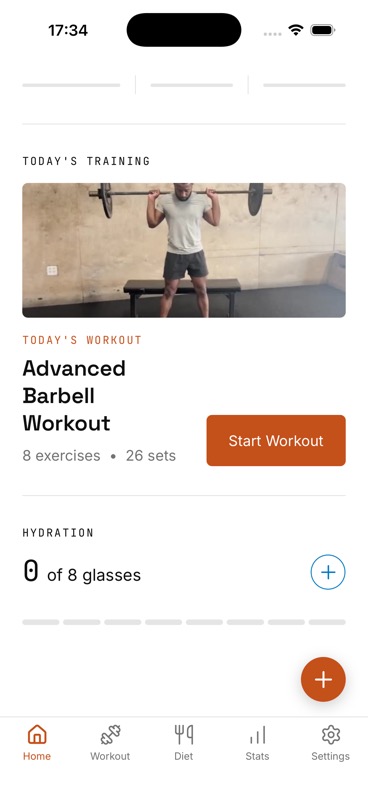
Choose fat loss during onboarding and IGN8 creates a starting calorie and macro estimate using your inputs. Add meals to breakfast, lunch, dinner or snacks through the confirmed food-search and manual-entry flows. The dashboard shows calories consumed, the target, calories remaining, protein, carbohydrates and fat—without subtracting exercise calories or claiming a “net calorie” result.
Choose a workout template or build your own weekly gym plan, then log sets, reps, weight and rest during each session. Stats bring calorie trends, workout completion, consistency, streaks, key lifts and weight trends into one review. You make any adjustment; IGN8 does not automatically prescribe food or adapt training based on the data.
One goal, one view
Keep the strength work in the fat-loss conversation
A calorie counter alone can make the day look like a food budget. IGN8 adds the actual gym plan, set log and performance trend, so progress review includes what happened in training as well as what was recorded in the diary.
Sources and further reading
- Centers for Disease Control and Prevention: Steps for Losing Weight
- Centers for Disease Control and Prevention: Physical Activity and Your Weight and Health
- National Institute of Diabetes and Digestive and Kidney Diseases: Body Weight Planner
Your routine, connected
Track the workout and the calorie target together
Join the IGN8 early-access waitlist to hear when the all-in-one workout and nutrition tracker launches.