Direct answer: For muscle gain, combine a consistent resistance-training plan with enough overall food and protein for your individual needs. Log exercises, sets, reps and load; record meals and protein; then review workout completion, key lifts and body-weight trends over time. Adjust one variable at a time instead of reacting to a single session or day.
What should you track for muscle gain?
Start with signals you can act on: scheduled workouts completed, performance on repeat exercises, total food intake, protein intake and a longer-term body-weight trend. Measurements or progress photos can add context if you find them useful, but they do not need to become a daily scorecard.
Resistance training is the training stimulus. The current American College of Sports Medicine position stand emphasizes consistency, training major muscle groups and matching the program to the goal. Nutrition supports the process; a meta-analysis of randomized resistance-training trials found that protein supplementation can augment gains in muscle mass and strength, while also showing that more is not endlessly better.
Build a coordinated muscle-gain routine
-
Choose training days you can keep
A realistic three-day plan completed regularly can be more useful than an ambitious schedule you routinely miss. Choose days, equipment and exercises that cover the major muscle groups and fit your experience. The U.S. physical activity guidelines recommend muscle-strengthening activity on at least two days each week for general health; a goal-specific plan may differ.
-
Make key exercises repeatable
Keep enough stable movements in the plan to compare performance. Log the actual weight, repetitions, completed sets and relevant context. Progress may appear as more reps with the same load, more load for similar reps, improved control, or reliable completion—not just a personal record every week.
-
Set a food target as a starting estimate
Calorie needs vary with body size, activity and many other factors. Use an initial estimate, log your normal intake and compare it with weight and training trends. Avoid turning an estimated target into a guaranteed muscle-gain formula.
-
Track protein in ordinary meals
Record protein alongside total calories rather than chasing it in isolation. Build meals from foods that fit your preferences and dietary needs. The USDA Protein Foods guidance lists varied animal and plant sources, including seafood, lean meat, eggs, beans, lentils, nuts, seeds and soy foods.
-
Review in blocks, not moments
One flat workout can reflect sleep, stress, technique or normal variation. One scale reading can reflect food, fluid or timing. Review a consistent block of logged workouts and nutrition, then decide whether the plan needs a small training or food change.
Turn your logs into a decision
The examples below are prompts for review, not diagnoses or automatic prescriptions.
| Pattern across time | Question to ask | Possible next step |
|---|---|---|
| Workouts are often missed | Does the schedule fit real life? | Reduce or rearrange days before adding complexity |
| Training is consistent, logs are incomplete | Can you compare the same lifts? | Record working sets, reps and load more consistently |
| Protein varies widely day to day | Which meal is least predictable? | Plan one repeatable protein-containing option there |
| Performance and weight trends are unclear | Is there enough consistent data? | Keep the routine stable longer before changing it |
| Food logging is precise but training is random | Is nutrition getting all the attention? | Adopt a repeatable weekly workout plan |
How to use IGN8 as a muscle gain workout and meal tracker
Select muscle gain during setup to receive a starting calorie and macro estimate. Choose a workout template or build a two- to six-day weekly gym plan, then log weight, reps or duration set by set with the in-workout rest timer. In the Nutrition area, add meals through database search or manual entry and follow calories, protein, carbohydrates and fat.
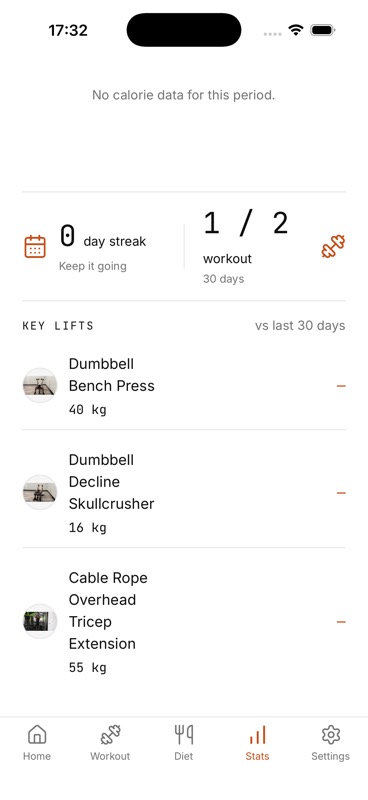
The Stats view brings workout completion, streaks, key-lift trends and weight trends into the same account as calorie trends and consistency. IGN8 shows the evidence together; it does not automatically adapt your workout plan based on nutrition data or prescribe a diet.
Less app switching
Plan the lift. Log the meal. Review both.
A strength-focused workout tracker and a separate macro tracker can each hold half of the story. IGN8 is designed to keep the weekly plan, active set log, meal diary, macro targets, key lifts and weight trend in one daily workflow.
Sources and further reading
- American College of Sports Medicine: 2026 resistance-training position stand overview
- U.S. Office of Disease Prevention and Health Promotion: Physical Activity Guidelines highlights
- British Journal of Sports Medicine: Protein supplementation and resistance-training meta-analysis
Training plus nutrition
Put your muscle-gain routine in one app
Join the IGN8 early-access waitlist for launch news and be first to track workouts, meals and key lifts together.